Importation of medical supplies: essential requirements for COFEPRIS compliance, explained for U.S. healthcare investors. Learn key regulations, licensing processes, and import strategies to successfully enter the Mexican market.
Introduction to Medical Supply Importation in Mexico
Entering the Mexican healthcare market can be a highly profitable move for U.S. investors, especially hospital owners and administrators seeking expansion opportunities. However, understanding Importación de insumos médicos: Requisitos esenciales para el cumplimiento de Cofepris is critical before making any investment.
Mexico’s healthcare system is rapidly growing, driven by private sector demand, medical tourism, and government reforms. Yet, strict regulatory oversight ensures that all imported medical supplies meet safety and quality standards.
Why Mexico is a Strategic Market for U.S. Healthcare Investors
Mexico offers several advantages:
- Proximity to the United States
- Lower operational costs
- Expanding private healthcare sector
- Increasing demand for advanced medical technology
For U.S.-based hospital owners, this creates an ideal environment to scale operations while maintaining profitability.
Overview of Regulatory Landscape
Mexico enforces strict health regulations through Federal Commission for Protection against Sanitary Risk, the primary authority responsible for approving and monitoring medical products.
Understanding COFEPRIS and Its Authority
What is COFEPRIS?
COFEPRIS is Mexico’s equivalent of the Food and Drug Administration in the United States. It oversees:
- Medical devices
- Pharmaceuticals
- Healthcare services
- Food safety
Role in Public Health and Safety
COFEPRIS ensures that all imported medical supplies meet safety, efficacy, and quality standards before entering the Mexican market.
Comparison with FDA Regulations
While similar to the FDA, COFEPRIS has unique requirements, particularly in documentation and language compliance.
Key Requirements for Importación de insumos médicos: Requisitos esenciales para el cumplimiento de Cofepris
Understanding the compliance framework is essential for avoiding delays and penalties.
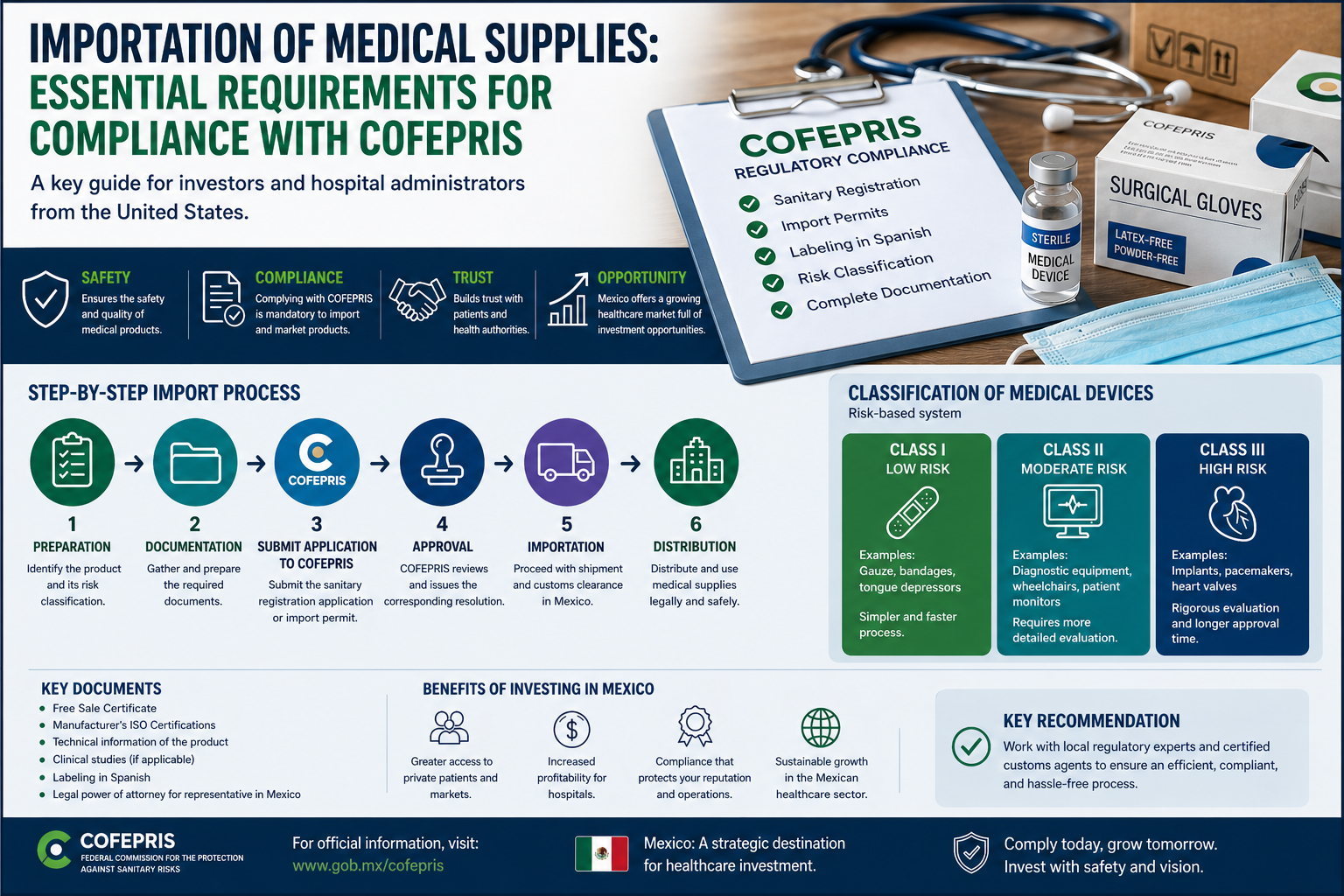
Sanitary Registration (Registro Sanitario)
This is the most critical requirement. Without it, medical products cannot be legally sold or distributed in Mexico.
Required Documentation
- Product description and specifications
- Clinical data (if applicable)
- Manufacturer certifications
- Free Sale Certificate
Import Permits and Authorizations
Some products require additional permits depending on their classification and intended use.
When Permits Are Mandatory
- High-risk medical devices
- Controlled substances
- New or innovative technologies
Labeling Compliance Standards
All medical products must comply with strict labeling rules.
Spanish Language Requirements
Labels must include:
- Instructions in Spanish
- Manufacturer details
- Expiration date
- Batch number
Failure to comply can result in immediate rejection at customs.
Classification of Medical Devices in Mexico
Risk-Based Classification System
COFEPRIS classifies devices based on risk level.
Class I, II, and III Devices
| ClassRisk LevelExamples | ||
| Class I | Low Risk | Bandages |
| Class II | Moderate Risk | Diagnostic equipment |
| Class III | High Risk | Implants |
Step-by-Step Import Process
Pre-Import Preparation
Before shipping:
- Obtain sanitary registration
- Verify labeling compliance
- Secure necessary permits
Customs Clearance Procedures
Products must pass through Mexican customs for inspection.
Role of Customs Brokers
Licensed customs brokers ensure proper documentation and smooth clearance.
Common Challenges for U.S. Investors
Regulatory Delays
Approval processes can take months if documentation is incomplete.
Documentation Errors
Minor mistakes can result in shipment delays or rejections.
Cultural and Legal Differences
Understanding local business practices is essential for success.
Strategic Tips for Compliance Success
Partnering with Local Experts
Working with Mexican regulatory consultants can significantly reduce risk.
Regulatory Intelligence and Planning
Stay updated on regulatory changes and plan ahead to avoid disruptions.
Costs and Timelines
Estimated Fees
- Sanitary registration: $2,000–$10,000 USD aprox.
- Import permits: Variable
- Consulting fees: Additional
Approval Timeframes
- Class I: 1–3 months
- Class II: 3–6 months
- Class III: 6–12 months
Legal Risks and Penalties
Non-Compliance Consequences
Failure to comply with COFEPRIS regulations can lead to:
- Product bans
- Business suspension
- Legal action
Product Seizure and Fines
Customs authorities may confiscate non-compliant goods and impose fines.
Future Trends in Mexican Medical Imports
Digitalization of COFEPRIS Processes
Mexico is modernizing its regulatory systems, making approvals faster.
Opportunities for Private Healthcare Expansion
The private healthcare sector continues to grow, offering strong ROI potential.
FAQs
1. Do U.S. FDA approvals automatically apply in Mexico?
No, COFEPRIS requires separate approval, although FDA certification can support the process.
2. How long does COFEPRIS approval take?
It varies from 1 to 12 months depending on product classification.
3. Can I import medical devices without a local partner?
It is possible but highly recommended to work with a local distributor or consultant.
4. Are all medical devices subject to sanitary registration?
Most are, but low-risk devices may have simplified procedures.
5. What happens if labeling is not in Spanish?
Products will likely be rejected at customs.
6. Is Mexico a profitable market for healthcare investors?
Yes, due to growing demand and lower operational costs.
Conclusion
Understanding Importación de insumos médicos: Requisitos esenciales para el cumplimiento de Cofepris is essential for any U.S. investor looking to expand into Mexico’s healthcare sector. While the regulatory environment may seem complex, proper planning, expert partnerships, and compliance strategies can turn this challenge into a highly profitable opportunity.
For hospital owners and administrators, Mexico offers a compelling combination of growth potential, cost efficiency, and increasing demand for high-quality medical services. By aligning with COFEPRIS requirements, investors can unlock long-term success in this expanding market.